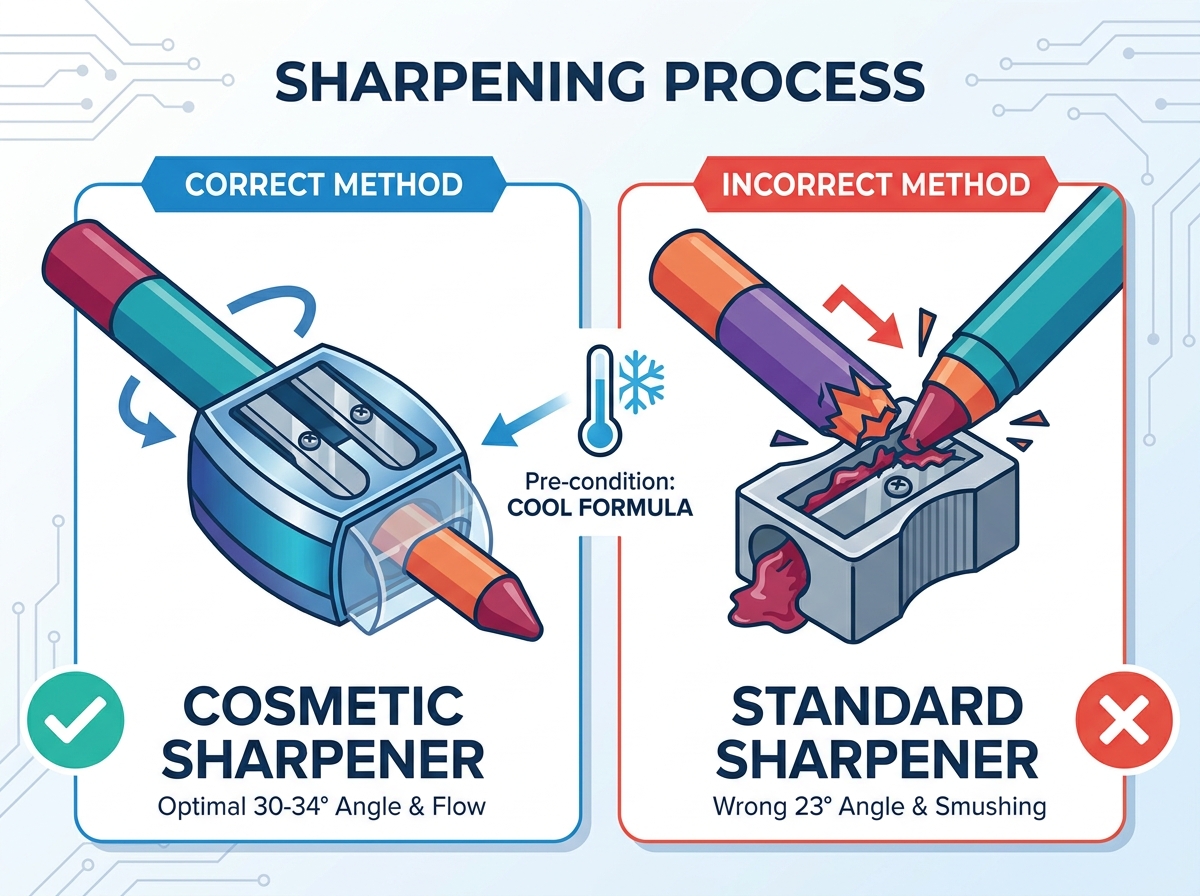
Many makeup users encounter a frustrating dilemma when their favorite lip crayon loses its sharp tip. The casing often looks like solid plastic. It completely lacks a twist-up mechanism. You might wonder if you should throw the dull product away. The definitive answer is simple. Yes, you can and absolutely should sharpen these products. This applies directly to non-retractable cosmetic formulas. Using the wrong tool wastes expensive pigment. Incorrect techniques cause splintering or ruin the creamy texture entirely. Proper maintenance preserves your investment. It ensures a clean, precise application every single time you do your makeup. Read on to discover how to identify sharpenable casings confidently. We will explore why standard stationery sharpeners fail miserably on soft cosmetics. Finally, you will learn the exact step-by-step method professionals use to keep lip products in perfect condition.
Key Takeaways
Identify the casing: Even solid-looking plastic/composite casings on non-retractable lip crayons are designed to be shaved down by a specialized sharpener.
Avoid standard sharpeners: School or office sharpeners have the wrong blade angle and will destroy soft cosmetic formulas.
The temperature matters: Hardening the product briefly before sharpening prevents the formula from sticking to the blades.
Invest in cosmetic-grade tools: A dual-barrel cosmetic sharpener with high-carbon steel blades is a non-negotiable requirement for crayon maintenance.
How to Determine if Your Lip Crayon Needs Sharpening
Modern cosmetic packaging frequently causes consumer confusion. Many users hesitate to sharpen their makeup. They assume the rigid exterior will shatter. We must address the "plastic casing" illusion first. Many makeup brands utilize a PVC or composite plastic casing. This material feels remarkably hard to the touch. However, chemists engineer this specific plastic to be shaved cleanly. Think of it as a high-tech synthetic wood. It protects the volatile ingredients inside the formula. Traditional wood breathes and lets moisture escape. Composite plastics create an airtight seal. This seal prevents creamy pigments from drying out prematurely. You can safely slice through this material using the proper tool.
You must check the base for a twist mechanism next. This step differentiates a retractable product from a sharpenable one. Examine the bottom cap closely. Try to rotate it gently in either direction. If the base spins freely but fails to push the product up, it requires sharpening. This spinning part is often a decorative dummy cap. It serves no mechanical function. Do not force it. Pushing too hard breaks the internal structure.
You should also look for specific visual cues. Sharpenable products typically lack a visible internal track. Retractable pens feature small seams or split lines near the base. A sharpenable lip crayon usually features a seamless barrel design. The bottom cap attaches firmly without any gaps. If you see a solid, continuous tube, prepare your sharpener. Trust the design process. Cosmetic companies manufacture these items specifically for blade maintenance.
Casing Assessment Guide
Feature
Sharpenable Formula
Retractable Formula
Exterior Material
Wood or composite PVC plastic
Hard, brittle acrylic plastic
Base Design
Solid, fixed, or free-spinning dummy cap
Threaded base that clicks or twists with resistance
Barrel Seams
Completely smooth and continuous
Visible internal tracks or split lines
Product Core
Wax poured directly into the barrel
Product sits in a movable plastic cup
Why Standard Pencil Sharpeners Fail on Lip Crayons
You might feel tempted to grab a school sharpener from your desk. You must resist this urge immediately. Standard sharpeners destroy soft cosmetics entirely. The core issue lies in the blade angle and bevel. We must understand the structural difference between these tools. Standard sharpeners tackle hard graphite and dense wood. They utilize a steep 23-degree blade angle. This aggressive bevel digs deeply into rigid materials to expose the graphite core quickly. Cosmetic sharpeners feature a much gentler angle. They sit around 30 to 34 degrees. This wider angle shaves away composite casings gently. It avoids eating into the soft wax core. The gentle sheer protects the structural integrity of your makeup.
Sanitation presents another massive concern. We must highlight the hygiene risks of multipurpose sharpeners. You cannot effectively sanitize a tool used for graphite and wood. Wood fibers trap moisture. Graphite dust coats the blades. These elements create a perfect breeding ground for bacteria. Using these contaminated tools on a lip crayon introduces harmful microbes directly to your skin. This risk leads to painful lip breakouts. It also causes severe product contamination. Your expensive makeup becomes unusable and dangerous.
Waste and smushing plague improper tool usage. Dull or improperly angled blades cause immediate failure. The creamy pigment gets trapped inside the blade housing. The steep angle forces soft wax upward instead of cutting it cleanly. You end up scraping out huge chunks of expensive formula. Users often waste up to 20% of their usable product this way. A correct cosmetic blade shears cleanly through the wax. It leaves a smooth, pristine surface behind. It preserves every drop of pigment for actual application.
Step-by-Step Implementation: The Expert Method for Sharpening
Professional makeup artists follow strict protocols for tool maintenance. They handle expensive products daily. They cannot afford breakage or wasted pigment. You can achieve factory-level precision at home. You just need to follow this deliberate, sequential process. Careful execution prevents all common maintenance disasters.
Step 1: The Freezer Technique (Pre-conditioning). You must alter the temperature of the formula first. Place your cosmetic item in the fridge or freezer. Leave it there for 10 to 15 minutes prior to sharpening. We do this to manipulate the cosmetic chemistry. Most lip products contain soft emollients and waxes like carnauba or beeswax. Room temperature makes them mushy. Cold temperatures firm up these emollients temporarily. Firming the product prevents "smushing" inside the blade housing. It stops the delicate core from snapping off under pressure.
Step 2: Selecting the Correct Barrel. Most high-quality tools feature two different holes. Ensure the cosmetic fits snugly in the larger barrel of a dual sharpener. A loose fit causes wobbly rotations. Wobbly movements lead to uneven shaving. They leave jagged, sharp plastic edges behind. The barrel must support the sides of the product completely during rotation.
Step 3: The Turn and Shave Protocol. Insert the chilled makeup into the barrel. Advise rotating it gently and continuously in one direction. Apply even, minimal pressure. Never force it inward. Twisting back and forth creates micro-fissures in the wax core. These fissures lead to structural failure. Stop after one or two full rotations. Over-sharpening wastes pigment unnecessarily. You only need to expose a small, rounded tip for proper application.
Step 4: Tool Maintenance. You must clean the blade immediately after use. Locate the embedded cleaning pick included with your tool. Use it to gently scrape away waxy residue from the blade edge. Do this before the wax returns to room temperature and hardens. Immediate cleaning prevents buildup. It ensures a razor-sharp cut for your next use. Proper maintenance extends the life of your equipment significantly.
Evaluating Cosmetic Sharpeners: What to Look For
Purchasing the correct tool changes everything about your makeup routine. You need reliable performance for daily use. Not all beauty accessories offer the same quality. Focus on specific purchasing criteria when evaluating these tools. A cheap plastic tool ruins expensive makeup quickly. Investing a few extra dollars saves money in the long run.
High-carbon steel blades remain a non-negotiable feature. You must understand why metal quality matters. Manufacturers often use cheap aluminum or low-grade stainless steel for bargain tools. These dull rapidly. High-carbon steel prevents rust accumulation. It maintains a razor-sharp edge through incredibly tough composite casings. Cosmetic brands engineer synthetic casings to be resilient. You need a blade capable of slicing through PVC effortlessly time after time. Many top-tier blades originate from specialized metalworking regions like Solingen, Germany.
Dual-barrel designs provide essential versatility. We frame this as a major scalability feature. You do not want a cluttered makeup bag filled with single-use tools. One well-designed tool should accommodate everything. The standard barrel fits slim lip liners and traditional eyeliners. The jumbo barrel manages your chunky lip crayon effortlessly. It also fits thick highlighting sticks and concealer pencils. This dual functionality ensures you always have the right fit available.
Removable shaving catchers elevate the user experience. You must highlight the necessity of an enclosed casing. Heavily pigmented wax shavings create massive messes. They stain bathroom counters instantly. They ruin the interior lining of cosmetic bags. A secure, removable casing contains this messy debris perfectly. You simply pop the lid off over a trash receptacle. It makes the entire maintenance process clean and stress-free.
Integrated cleaning picks define top-tier tools. Wax buildup dulls blades faster than physical wear. Premium sharpeners always include a built-in plastic pick. This tiny tool sits flush inside the casing. You use it to safely clear the blade edge without dulling it. Never use metal pins or needles to clean your tool. Metal scratches the delicate blade bevel. Scratches ruin the cutting angle permanently.
Feature Evaluation Chart
Sharpener Feature
Primary Benefit
Impact on Product
High-Carbon Steel
Retains factory sharpness longer
Prevents casing splintering
Dual-Barrel Setup
Accommodates varying diameters
Ensures snug fit to prevent wobbling
34-Degree Blade Angle
Shaves shallowly rather than deeply
Preserves soft wax core
Integrated Cleaning Pick
Removes sticky wax safely
Maintains blade hygiene
Troubleshooting Common Crayon Maintenance Issues
Even seasoned experts run into occasional problems. Variables like room temperature and tool age impact performance. You do not need to panic when things go wrong. Most issues stem from easily correctable mistakes. Let us solve the most frequent frustrations encountered during routine maintenance.
Problem: The tip keeps breaking off inside the sharpener. This issue frustrates users the most. You lose a large chunk of pigment when this happens. Cause and Solution: The formula is simply too warm. Heat softens the structural integrity of the wax. Alternatively, your blade is completely dull. Chill the product immediately. If it still breaks after chilling, replace the tool entirely. Blades typically dull after six to twelve months of heavy use. A dull blade pushes the wax rather than cutting it.
Problem: The plastic casing is splintering into sharp edges. Jagged plastic scratches your lips during application. It creates an unsafe user experience. Cause and Solution: The blade is misaligned. You might be using a tool not meant for cosmetics. A sharp, properly angled cosmetic blade creates a continuous, smooth ribbon of plastic. It never leaves fragmented, dangerous shards behind. Discard any tool that splinters your makeup.
Problem: The lip crayon is stuck inside the barrel. You try to pull the product out, but it wedges firmly in place. Cause and Solution: You are applying too much downward force. Users often push hard instinctively. Stop pushing the cosmetic inward. Focus entirely on rotational force instead. Let the sharp blades do the actual work. If a product gets stuck, use a sterile tweezers to gently wiggle it free. Do not twist aggressively while pulling.
Routine hygiene also prevents performance issues. Wash your tools periodically with rubbing alcohol. This breaks down stubborn oils. It sanitizes the entire housing. Let the tool air dry completely before using it again. Moisture causes internal metal parts to corrode over time. A pristine tool guarantees a pristine makeup application.
Conclusion
Sharpening a solid-looking lip product represents standard industry practice. It is completely safe for the product when executed with intent. Understanding the difference between composite casings and retractable mechanisms empowers you as a consumer. You no longer need to throw away dull cosmetics. Intentional techniques preserve your expensive formulas beautifully.
Take inventory of your current makeup collection today. Locate all those dull, neglected products hiding at the bottom of your bag. Upgrade your routine by purchasing a professional-grade dual sharpener immediately. This simple, affordable investment restores them all to factory-level precision. It breathes new life into items you thought were ruined.
Browse trusted beauty retailers for high-carbon steel tools. Review your favorite ingredient lists for better edge retention. Firmer waxes hold a sharp tip much longer than glossy balms. Start practicing the freezer method tonight. You will enjoy a flawless, precise application tomorrow morning.
FAQ
Q: Can I sharpen a plastic lip crayon?
A: Yes, you absolutely can. If it does not feature a twist-up base, the manufacturer formulated the plastic to be shaved. Cosmetic brands use specialized composite PVC. This material acts like synthetic wood. It protects the soft core while allowing a sharp cosmetic blade to slice through it cleanly.
Q: How do I sharpen a lip crayon without a sharpener?
A: We strongly advise against this approach due to safety risks and extreme product waste. However, in an absolute emergency, use a sterilized makeup spatula. You can scrape small amounts of pigment directly from a flat tip. Never use kitchen knives or scissors on your cosmetics.
Q: Why does my lip crayon twist base just spin?
A: It is highly likely a dummy cap. Brands often mold the plastic to look like a twist mechanism for aesthetic reasons. If it spins freely without pushing the pigment upward, the product is not retractable. It requires physical sharpening with a dual-barrel cosmetic tool.
Guangzhou Vast Cosmetic Co.,Ltd. was established in 2018, a high-tech enterprise focusing on customizing make-up for customers, integrating scientific research, production, sales and service.