Consumers frequently face a frustrating dilemma between rocking vivid lip color and maintaining adequate lip hydration. You want a bold, flawless pout, but you also despise the cracked, peeling feeling that follows hours of wear. This daily struggle forces many makeup enthusiasts to choose between aesthetics and physical comfort. It also leads many people to wonder if a lip crayon can actually supplement, replace, or enhance your traditional chapstick.
Addressing this premise requires looking closely at how different cosmetic products interact on a chemical level. Do they actively help each other perform better, or do they constantly fight for surface dominance? In this comprehensive guide, we provide an objective breakdown of common cosmetic formulations. We will explore the precise science of layering heavy occlusives alongside vibrant, long-lasting pigments. Finally, you will learn clear evaluation criteria for selecting non-drying beauty products that actually support your daily skincare routine.
Key Takeaways
Formulation distinction: A standard lip crayon focuses on pigment delivery and precision, whereas chapstick focuses on barrier repair and occlusion. They do not intrinsically "help" each other without strategic application.
Hybrid capabilities: Tinted lip crayons with high humectant and oil ratios can temporarily replace chapstick, but usually sacrifice wear-time.
Layering realities: Applying chapstick directly under a lip crayon significantly reduces the crayon’s adherence and longevity.
Purchasing criteria: Identifying hydrating crayons requires looking past marketing claims to specific ingredient profiles (e.g., squalane, shea butter, hyaluronic acid).
The Formulation Gap: Lip Crayon vs. Traditional Chapstick
To understand why specific lip cosmetics interact poorly, we must examine their primary functions. Traditional chapstick acts as a defensive medicinal shield for vulnerable skin. It relies heavily on thick occlusives like petrolatum, lanolin, and beeswax. These dense ingredients sit heavily on the skin surface. They form a physical, waterproof barrier to prevent transepidermal water loss (TEWL). When you lose natural moisture through the exceptionally thin skin of your mouth, the tissue cracks. Emollients included in the balm then step in to soften those rough, damaged edges. They smooth the cellular surface to provide immediate relief and comfort.
On the other hand, we have purely color-focused cosmetics. A typical lip crayon serves an entirely different aesthetic purpose. Chemists formulate these products using much higher hard wax ratios, such as carnauba or candelilla wax. They also pack them full of heavy, dry pigment loads. This specific formulation ratio provides vital structural integrity. It allows the cosmetic to maintain a firm pencil shape without melting in your bag. The high pigment concentration also guarantees an opaque, saturated color payoff upon initial application.
This deep structural difference creates a significant friction point during daily wear. High pigment formulas inherently absorb ambient moisture. Matte finishes represent the absolute worst offenders in this category. The dry powder binders needed to create a shine-free look act exactly like tiny sponges. They aggressively soak up your natural skin oils. They actively work against the moisture-retaining goals of your favorite healing balm.
Therefore, we can draw a clear, scientifically backed conclusion regarding mutual benefit. A cosmetic color pencil does not chemically help a healing balm perform better. In reality, the two formulations fight each other aggressively. They constantly compete for surface adhesion on your skin. If the oily occlusive wins, the color slides off your face. If the dry pigment wins, your lips dry out completely. Understanding this foundational chemical conflict remains crucial for better makeup application.
Below is a quick breakdown comparing these two distinct formulas to help visualize their differences.
Lip Product Formulation Comparison
Feature
Traditional Chapstick
Standard Crayon
Primary Goal
Barrier repair and intense occlusion
Opaque color and application precision
Key Ingredients
Petrolatum, soothing emollients, soft waxes
Hard structural waxes, heavy pigments, binders
Effect on Moisture
Actively prevents water loss (TEWL)
Absorbs surface oils and skin moisture
General Wear Time
Requires frequent, daily reapplication
Designed specifically for extended wear
Evaluating Hybrid Products: Can a Lip Crayon Replace Your Balm?
Many modern cosmetic brands now heavily market moisturizing balm-crayon hybrids. These products attempt to bridge the glaring formulation gap discussed above. They promise consumers both vivid color payoff and deep, restorative hydration. Consequently, the beauty industry has seen a massive rise in these two-in-one convenience solutions. But can a tinted hybrid actually replace your dedicated, medicinal chapstick?
You must anticipate specific trade-offs when evaluating these dual-purpose products. In cosmetic chemistry, features always dictate performance outcomes. First, consider the inverse relationship between moisture and wear time. Products containing high levels of hydrating oils slip around easily due to body heat. A lip crayon mimicking a traditional balm simply cannot lock onto the skin. Consequently, it will require frequent reapplication throughout your busy day. You inevitably sacrifice longevity for physical comfort.
Second, you must understand how visual finishes impact underlying hydration. Consumers often fall for clever marketing tricks regarding matte formulas. Brands might infuse a long-wear matte product using tiny, trace amounts of hyaluronic acid. They then label it as "hydrating." However, a true matte finish always reduces hydration over time. Long-wear formulas physically lack the necessary emollients required to heal chapped skin. The dry binding agents overpower the moisturizing ingredients every single time.
Knowing exactly when to substitute a hybrid product is essential for maintaining skin health. You can safely swap your chapstick for a hydrating tinted pencil during low-maintenance days. It works beautifully for standard office wear, running errands, or casual outings. In these specific scenarios, minor color fading remains perfectly acceptable. You just reapply the product exactly like a regular balm.
However, you should never use a tinted hybrid for active barrier repair. If you suffer from severely cracked, wind-burned, or bleeding lips, stop using color cosmetics entirely. Tinted products cannot provide the intense occlusive seal required for deep tissue healing. Stick strictly to heavy, unpigmented medicinal balms until your skin barrier fully recovers.
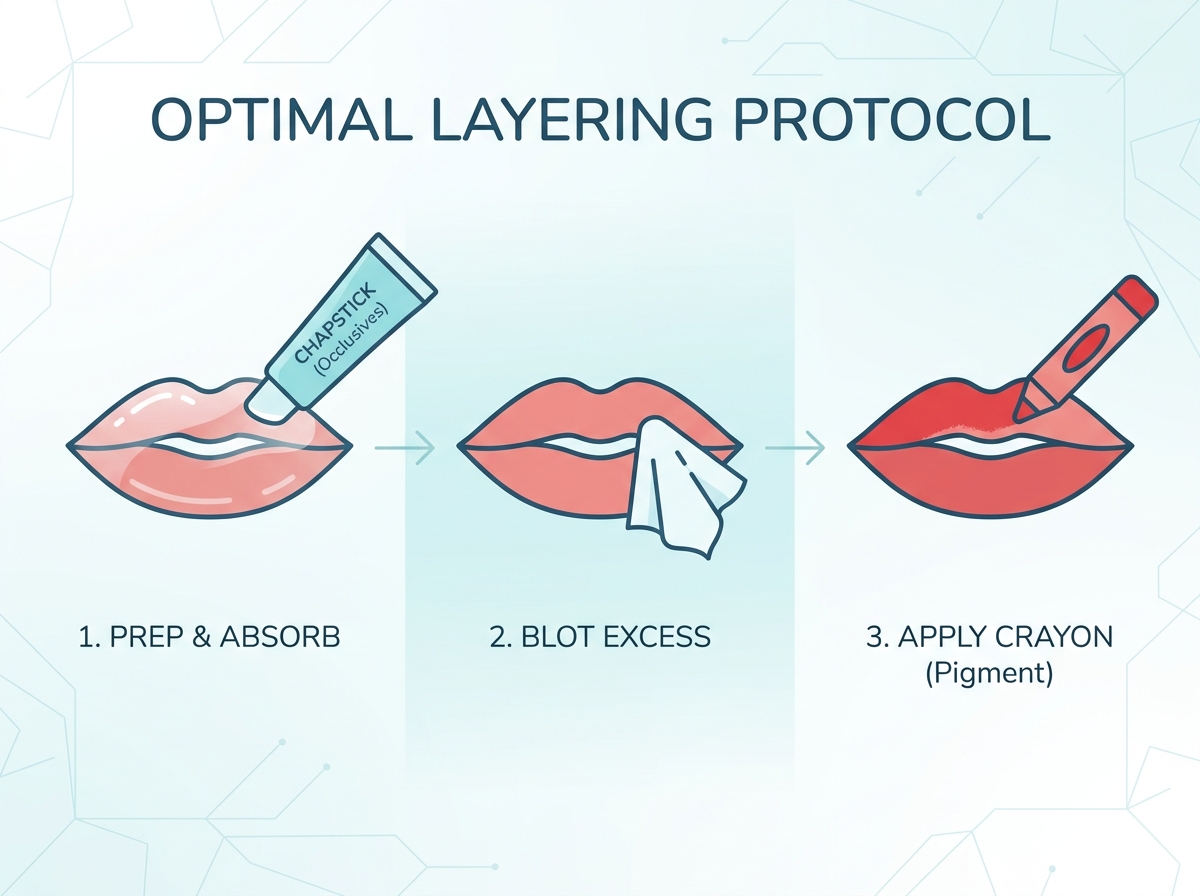
The Layering Protocol: How to Use Both Without Compromising Wear
Many makeup enthusiasts try to cheat the system by layering products heavily. They assume they can easily get the best of both worlds. Unfortunately, improper layering creates massive implementation risks. Applying a vibrant color directly over a fresh, thick layer of chapstick usually ends in disaster. The heavy oils in the balm create a highly slippery surface. The pigment cannot adhere properly to the skin cells. It will instantly slide around, feather outside your natural borders, and fade prematurely within an hour.
To solve this frustrating issue, you need a highly structured application method. Following a specific protocol allows you to wear both products effectively without destroying your look. It minimizes the risk of compromising your makeup's intended wear time.
Prep & Penetration: Start your morning skincare routine by addressing your mouth first. Apply a heavy, generous layer of your favorite hydrating chapstick. Let this thick layer sit undisturbed for 10 to 15 minutes. This mandatory waiting period allows the emollients to soften dry flakes and penetrate the upper skin layers.
The Blotting Step: Do not skip this crucial action. Take a clean facial tissue and gently press it against your mouth. Blot away all excess surface oils. Your skin should feel thoroughly conditioned but completely dry to the touch.
Application: Now, grab your chosen color product. Apply the formula directly onto the freshly conditioned, oil-free surface. The lack of surface oil ensures maximum grip. You will achieve the true color payoff intended by the manufacturer without the formula sliding.
Targeted Sealing (Optional): Sometimes matte formulas feel uncomfortably tight after they fully dry down. If this happens, you can add a microscopic amount of balm later. Tap it very lightly using your ring finger only on the center of your bottom pout. Do not rub your mouth together aggressively.
Best Practices for Layering: Always exfoliate gently before starting this protocol. Removing dead skin cells creates a smooth canvas, which ensures vastly better pigment adhesion.
Common Mistakes to Avoid: Never swipe a heavy balm horizontally over a finished matte look. You will instantly destroy the structural binders holding the pigment in place, causing a messy, smeared appearance.
Decision Criteria: What to Look for in a Hydrating Lip Crayon
Finding a truly hydrating product requires smart, informed shopping habits. You must learn to look past flashy marketing claims and beautiful packaging. The ingredient list tells the true story of any cosmetic formula. Knowing exactly what to look for makes all the difference in your daily physical comfort.
First, scan the back label for specific hydration indicators. You want to see nourishing ingredients listed near the very top. Look specifically for jojoba oil, almond oil, and raw shea butter. These natural emollients provide excellent skin softening properties. Squalane serves as another fantastic, high-end addition. It mimics your skin's natural sebum effortlessly without feeling greasy. Vitamin E, frequently listed under its scientific name tocopherol, provides vital antioxidant protection while soothing existing irritation.
Conversely, you must know what chemical ingredients to actively avoid. Dry skin hates isododecane. This volatile solvent appears frequently in long-wear, transfer-proof formulas. It evaporates rapidly to set the makeup, but it aggressively takes your natural moisture away with it. You should also avoid heavy synthetic fragrances. They frequently trigger allergic contact dermatitis in sensitive individuals. Finally, steer clear of menthol, peppermint, and camphor. Brands use them to create a fun cooling sensation, but they often cause severe secondary drying over extended use.
Next, apply basic logic to your visual finish selection. If you heavily depend on chapstick daily, avoid opaque matte finishes completely. Instead, opt for satin, sheer, or glossy finishes. These specific formulas naturally contain much higher ratios of conditioning oils. They feel significantly more forgiving on textured, dry, or aging skin.
Finally, evaluate the packaging and scalability of the product before purchasing. An emollient-rich lip crayon requires airtight protection to survive. Ensure the product features a secure, click-tight cap. Look for a reliable twist-up mechanism or a high-quality sharpening barrel. Poor packaging allows ambient air to seep inside constantly. This daily exposure will cause your expensive, moisturizing formula to dry out, shrink, or snap entirely off at the base.
Debunking Common Myths About Lip Color and Moisture
The online beauty community circulates endless misinformation regarding hydration and color cosmetics. Understanding the fundamental science behind these products helps clear up the widespread confusion. Let us debunk three persistent myths right now to improve your daily routine.
Myth: "Applying chapstick heavily over a matte lip crayon turns it into a hydrating formula."
Fact: This popular technique never works as intended. Smearing an oily occlusive balm directly over dried pigment merely breaks down the wax binders. The oils in the balm act exactly like makeup remover. This causes the colored product to separate, pill up, and bleed outside your natural mouth lines. You lose the sleek matte effect without gaining genuine moisture penetration.
Myth: "All lip crayons inherently dry out your lips."
Fact: The physical delivery mechanism does not dictate underlying moisture levels. A pencil shape is just a packaging choice. Drying issues are exclusively tied to the matte or long-wear formulation itself. A sheer, balm-like formula housed safely inside a pencil component will hydrate your skin just as effectively as a traditional bullet lipstick or squeeze tube.
Myth: "Tingling crayons are actively moisturizing your skin."
Fact: You should view tingling or burning sensations as a glaring warning sign. Tingling usually indicates the presence of lip-plumping irritants. Ingredients like peppermint oil, cinnamon extract, capsaicin, or bee venom cause localized swelling. This swelling makes the area appear fuller temporarily. However, these harsh irritants actively disrupt the delicate skin barrier. They almost always exacerbate dryness, chapping, and peeling later in the day.
Conclusion
We can finally issue a clear, definitive verdict on this cosmetic dilemma. A standard color pencil does not naturally assist your daily chapstick. They serve entirely distinct, often conflicting functions. One delivers artistic, vivid pigment, while the other repairs damaged cellular barriers. However, bridging this formulation gap remains entirely possible. You can achieve both stunning color and lasting comfort through proper prep-and-blot layering techniques. Alternatively, you can simplify your busy routine by investing in specifically formulated hybrid products.
To move forward effectively, follow these actionable next steps:
Audit your current lip condition closely in a mirror before applying makeup.
If you notice severe cracking or active barrier damage, prioritize medicated chapstick immediately.
Pause all high-pigment, long-wear cosmetic usage until the delicate skin fully heals.
If you seek daily convenience over extreme longevity, shortlist a satin-finish color product.
Always verify that your new cosmetic contains proven, high-quality emollient ingredients like squalane, jojoba oil, or shea butter.
FAQ
Q: Should I put chapstick on before or after a lip crayon?
A: You should always apply your balm beforehand. Apply a generous layer at the start of your routine. Allow it to absorb fully for ten minutes. Then, gently blot off the excess surface oil with a tissue. Applying it immediately before ruins the crayon's adherence, causing the pigment to slide. Applying it heavily over a finished matte look will break down the wax binders, leading to smudging and feathering.
Q: Why does my lip crayon pill when mixed with lip balm?
A: Pilling occurs due to a chemical clash between distinct formulas. The heavy, rigid waxes found in the color product reject the slippery occlusives present in the balm. Instead of laying flat and binding to your skin, the two textures repel one another. This friction causes the combined formulas to ball up into tiny, uncomfortable clumps. Proper blotting prevents this clash.
Q: Do moisturizing lip crayons last as long as matte ones?
A: No, they do not. Longevity and moisture exist on opposite ends of the formulation spectrum. The exact ingredients that provide comfort—like conditioning oils, humectants, and soft emollients—inherently reduce the product's ability to lock onto the skin. They create a mobile formula that transfers easily onto cups and clothing. You trade extended wear time for daily hydration.
Guangzhou Vast Cosmetic Co.,Ltd. was established in 2018, a high-tech enterprise focusing on customizing make-up for customers, integrating scientific research, production, sales and service.