Many daily makeup routines feel unnecessarily cluttered and heavily time-consuming. You might spend too many rushed mornings juggling a sharp liner, a traditional lipstick, and a finishing gloss. Streamlining this complex process brings both exceptional speed and effortless elegance back to your daily ritual.
Users constantly seek ways to simplify their regimen by merging lip liner and lipstick into one highly efficient hybrid product. Traditional tools often demand too much steady precision or leave delicate skin feeling severely dehydrated by midday. A lip crayon serves as a highly practical, high-utility makeup solution designed specifically for speed and precision.
This comprehensive guide provides a professional application framework to help you master this versatile cosmetic tool. We highlight common implementation pitfalls so you can avoid them entirely. You will also discover clear, actionable criteria for evaluating and choosing the exact formula your daily routine requires.
Key Takeaways
Efficiency: Lip crayons eliminate the need for a separate lip liner, reducing application time and product clutter.
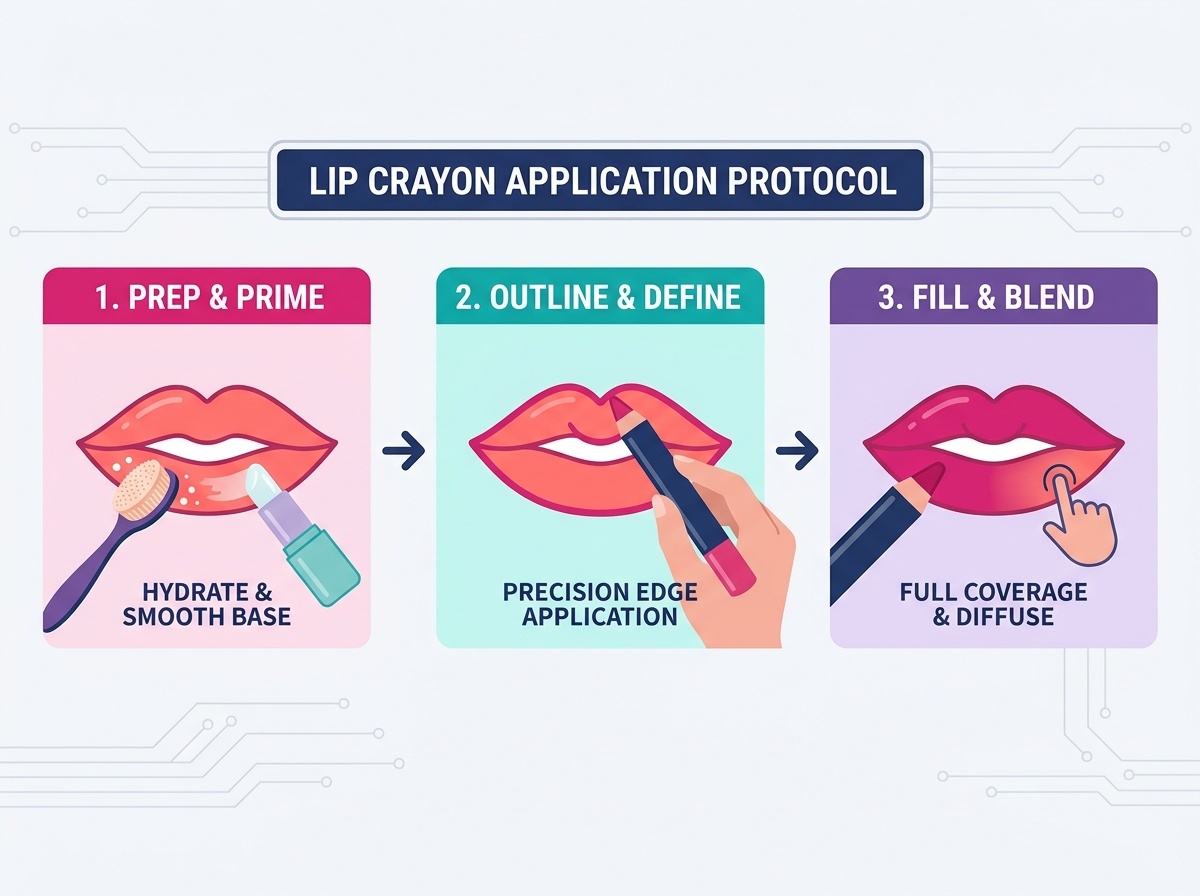
Application Protocol: Proper execution requires a three-step method: prep, outline, and fill.
Evaluation Criteria: Not all crayons are equal; purchasing decisions should hinge on formulation (matte vs. hydrating), packaging (retractable vs. sharpenable), and pigment density.
Realistic Expectations: While highly versatile, longevity claims must be balanced against hydration levels—true mattes last longer but require stricter lip prep.
The Functional Advantage: Why Transition to a Lip Crayon?
Traditional lipsticks often lack the precise edges required for a flawless finish. You typically need an accompanying lip liner to prevent messy borders and undefined shapes. This dual-product necessity clutters your vanity and slows down your morning. Alternatively, liquid lipsticks offer exceptional longevity. However, they frequently cause severe dehydration over several hours. They also require a remarkably steep learning curve to apply without making mistakes.
The hybrid solution bridges this frustrating gap seamlessly. It successfully merges the sharp boundary control of a pencil with the rich pigmentation of a standard lipstick. This dual-action design changes how we approach daily makeup application. It delivers professional results without demanding professional skills.
We can map specific product features directly to tangible outcomes for the user:
Tapered tip: This feature translates directly to built-in outlining capabilities. You no longer need to match a separate micro-pencil to your lipstick shade.
Chubby grip: A wider barrel translates to significantly better ergonomic control. It rests comfortably in your hand, reducing shakiness during application.
Consolidated formula: A unified product translates to reduced makeup bag volume. You enjoy vastly simplified touch-ups wherever you happen to travel.
Step-by-Step Execution: How to Apply a Lip Crayon
Proper execution guarantees professional, long-lasting results. Following a structured protocol maximizes the benefits of this hybrid tool.
Step 1: Base Prep (Implementation Realities)
All colored lip products share a hidden dependency on a smooth, healthy canvas. Ignoring base prep ruins even the most expensive formulas.
Begin with gentle mechanical exfoliation to remove dry, dead skin flakes.
Wipe the area clean with a damp, soft towel.
Apply a very light layer of non-greasy, hydrating balm.
Wait exactly two minutes to allow full absorption into the skin.
This crucial step prevents concentrated pigments from settling into microscopic fine lines. It provides a plump, uniform surface for the color to grip.
Step 2: Defining the Perimeter (Lining)
Creating a sharp boundary prevents color from bleeding later in the day. You must angle the product correctly to utilize its sharpest edge.
Start directly at the center of your upper lip.
Draw a distinct "X" on your Cupid's bow to mark the highest points.
Trace steadily outward from the center toward the commissures (the outer corners).
Repeat this outlining process along the center edge of your bottom lip.
Step 3: Filling and Blending (Diffusing)
Once you secure the perimeter, you must fill the interior space efficiently. Switch your angle from the sharp point to the flat side, or belly, of the tip. This modified angle allows rapid, beautifully even coverage across the wider center area.
You can easily customize your final look through different blending techniques. Try gently finger-tapping the freshly applied color. This diffuses the edges and creates a soft, modern stained effect. Alternatively, apply the stick directly to the skin with firm pressure. This method yields full, bold, traditional opacity.
Optional: Setting the Application
You might want extra longevity for long workdays or evening events. Try blotting your freshly painted lips gently using a single ply of facial tissue. This practical technique removes excess surface oils while pressing the pigment deeper into the skin. It naturally increases your wear-time. This method prevents you from relying on exaggerated, often unrealistic "24-hour" marketing claims.
Performance Evaluation: How to Choose the Right Formula
Formulations largely dictate daily performance. You must assess ingredients and packaging carefully before making a purchase. Evaluating these criteria ensures you select the correct tool for your lifestyle.
Hydrating vs. Matte Formulas
Consumers typically choose between two primary cosmetic textures. Each carries distinct benefits and unavoidable trade-offs.
Hydrating or balm-like options focus heavily on nourishing ingredients. You should look for elements like squalane, shea butter, or hyaluronic acid on the label. These perform exceptionally well for mature lips or casual everyday wear. They feel incredibly comfortable. The known trade-off is a generally lower wear-time, requiring frequent reapplication.
Matte or velvet options prioritize intense pigment payoff and extended longevity. They deliver a striking, highly opaque finish that resists transferring. The main trade-off is they require diligent, strict lip prep. Skipping base hydration here almost always leads to visible flaking.
Packaging Integrity: Retractable vs. Sharpenable
How a brand packages the pigment matters just as much as the formula itself.
Retractable designs twist up from the base. They create absolute zero waste. They feel highly convenient for quick travel touch-ups. However, the rounded tip blunts steadily over time, gradually reducing your lining precision.
Sharpenable designs feature a wood or dense plastic composite exterior. They always provide a perfectly sharp point for precision lining. However, they demand a dedicated cosmetic sharpener. This traditional format also results in minor product waste during the sharpening process.
Assessing Verifiable Claims
Marketing language can mislead eager buyers. We advise you to look closely for clinical hydration claims backed by data. Transparent, easily readable ingredient lists offer significantly more value than vague "long-lasting" promises. Scrutinize the box for dermatological testing notes.
Formula Type
Key Ingredients
Best Use Case
Main Trade-off
Hydrating / Balm
Squalane, Hyaluronic Acid
Mature lips, daily casual wear
Requires frequent touch-ups
Matte / Velvet
Silica, High-density pigments
Long events, bold aesthetics
Can dry out unprepared skin
Satin / Hybrid
Plant waxes, light oils
Balanced comfort and color
Lacks extreme precision
Troubleshooting Common Pitfalls & Implementation Risks
Even highly experienced makeup users encounter minor application setbacks. Understanding these specific risks helps you avoid them completely. We can examine the three most frequent problems.
Risk: Color Bleeding / Feathering
Pigment migrating outside your natural boundary ruins an otherwise perfect look. The primary cause is over-applying rich, hydrating formulas. Lacking a proper primer on mature lips also strongly contributes to feathering.
The solution involves securing the perimeter. Use a tiny brush to tap translucent setting powder directly onto the lip border. Alternatively, trace your outer edges using a clear, invisible wax pencil before applying any color. This creates a physical dam that stops pigment migration.
Risk: Product Breakage
Retractable designs face this frustrating issue quite often. Twisting up far too much product is the primary cause. Pressing too aggressively during application also snaps the fragile core.
The solution is entirely behavioral. Expose no more than two to three millimeters of product at any given time. Apply it using gentle, sweeping strokes rather than heavy downward pressure.
Risk: Uneven Fading
Nothing looks worse than a bold color fading into a patchy ring. Eating or drinking oil-based foods rapidly breaks down the protective cosmetic waxes. This process leaves uneven, patchy color behind.
The solution requires mastering the "layer and blot" technique. Apply your first coat, blot heavily with a tissue, and apply a second thin coat. This method effectively stains the underlying skin. When the top wax layer inevitably fades, the stained skin below maintains a uniform appearance.
Issue Encountered
Immediate Solution Strategy
Tip becomes too blunt for lining
Swipe the edges firmly against a clean tissue to reform the point.
Color looks cakey or heavy
Tap lightly with a clean ring finger to lift excess pigment.
Formula drags or pulls the skin
Warm the tip on the back of your hand for five seconds before use.
Multi-Use Applications & Shortlisting Logic
Getting the absolute most out of your cosmetics maximizes your return on investment. We can explore creative, highly effective hacks for your collection.
Maximizing ROI (The "Hacks")
You can safely use a hydrating lip crayon as a beautiful cream blush. It blends smoothly over liquid foundation to create a cohesive monochromatic look. You might also try it as a very subtle eye tint.
However, you must emphasize safety first. Always verify you have eye-safe ingredients before applying anything near your ocular area. Avoid dangerous cross-contamination by never applying the tip directly to your cheeks. Instead, aggressively warm the pigment on the back of your hand first. Then, pick up the color using your fingers or a stiff stippling brush.
Shortlisting Logic (Decision Framework)
Choosing your next product requires a logical framework. You should assess your current daily routine honestly.
If you are currently using two or more lip products daily (like a liner and a liquid matte), a high-pigment matte formula acts as the best single replacement.
If you are primarily seeking on-the-go moisture for a dry climate, index heavily toward sheer, tinted, hydrating formulas instead.
If you hate carrying a cosmetic sharpener, automatically filter your search to retractable models only.
Next-Step Actions
Guide yourself through a quick, ruthless makeup bag audit today. Empty your cosmetic pouch and categorize what you own. Identify your missing shades or your preferred daily textures. Knowing exactly what you lack prevents redundant, wasteful purchases in the future.
Conclusion
Mastering this hybrid tool relies entirely on understanding its unique dual nature. It serves equally well as both a sharp, precise liner and a broad, filling lipstick. You can achieve professional-looking results in a fraction of the time.
Successful long-term adoption depends on matching the specific formulation directly to your daily lifestyle. You must carefully balance your personal tolerance for midday touch-ups against your need for sustained, soothing lip comfort.
Take a few minutes today to thoroughly evaluate your current cosmetic lineup. Identify the glaring functional gaps in your morning routine. Finally, select a high-quality product that directly aligns with your everyday needs and stylistic preferences.
FAQ
Q: Do I need to use a lip liner with a lip crayon?
A: Generally, you do not need one. The tapered tip is specifically designed to replace traditional liners completely. It provides enough edge precision for standard daily application. However, a separate pencil liner can still be used if you prefer extreme over-lining for a highly dramatic, contoured effect.
Q: How do you keep a lip crayon sharp?
A: The maintenance method depends entirely on the packaging format. You maintain wooden or plastic composite models using a standard, dual-blade cosmetic sharpener. For retractable versions, gently swipe the sides of the dull tip against a clean tissue. This easy friction trick shapes the edges back into a usable point.
Q: Can you use a lip crayon as blush?
A: Yes, this works exceptionally well with hydrating or satin finishes. However, you must carefully consider the cross-contamination risk. To maintain proper hygiene, avoid applying the tip directly to your cheeks. Instead, warm the product on the back of your hand first, then blend it upward using your fingers.
Q: Why does my lip crayon dry out my lips?
A: This specific issue usually stems from true matte formulas. They naturally contain a high wax-to-oil ratio to ensure all-day longevity, which can draw moisture from your skin over time. We highly recommend strict prep protocols. Always exfoliate gently and apply a nourishing balm minutes before applying your color.
Guangzhou Vast Cosmetic Co.,Ltd. was established in 2018, a high-tech enterprise focusing on customizing make-up for customers, integrating scientific research, production, sales and service.