Finding your perfect makeup staple often feels amazing. But beauty enthusiasts constantly ask a crucial, double-sided question about their favorite cosmetic sticks. How long do they actually last? Buyers asking this question usually mean one of two things. They want to know how many hours it stays on their lips. Or, they want to know when the product officially expires. Understanding both of these timelines matters immensely. It allows you to evaluate formula quality effectively. It also helps you mitigate serious dermatological risks associated with old makeup. We will break down actual wear times by specific formula types to set realistic expectations. You will also learn strict clinical guidelines for product expiration, storage, and hygienic replacement. Let us explore how you can maximize both daily endurance and overall safety.
Key Takeaways
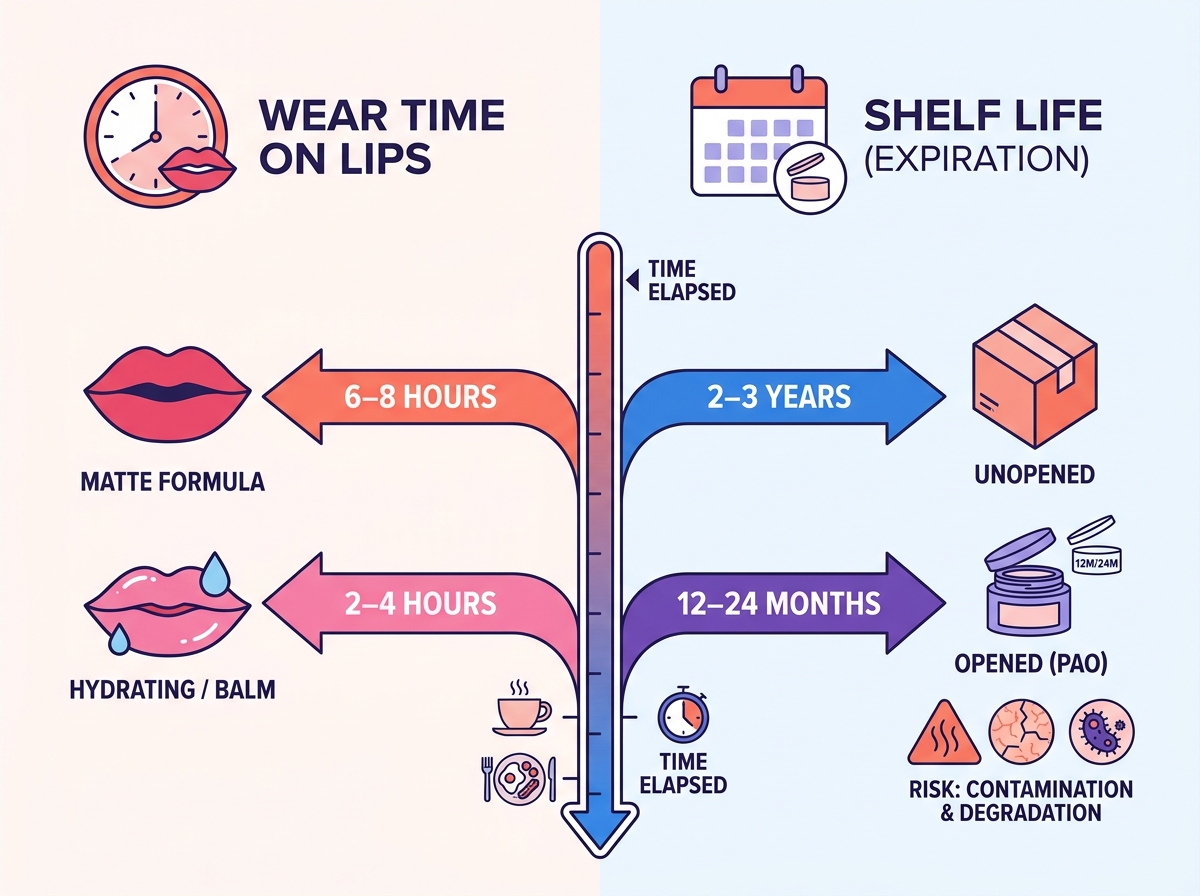
Wear Time on Lips: Matte lip crayons typically provide 6–8 hours of wear, while hydrating/balm-like formulas last 2–4 hours before requiring reapplication.
Shelf Life (Expiration): An unopened lip crayon can last 2–3 years; once opened, industry standard guidelines dictate a 12- to 24-month lifespan.
Contamination Risks: Using expired formulas increases the risk of bacterial buildup, which can lead to contact dermatitis or localized infections.
Formula Degradation: Key indicators of expiration include a waxy/crayon-like odor, a chalky texture, or oil separation ("sweating").
1. Performance Evaluation: Wear Time by Formula Type
Every cosmetic product balances chemistry. Longevity usually comes at the expense of hydration. Formulators call this the pigment-to-moisture tradeoff. High amounts of natural oils make a product feel luxurious. However, these slippery emollients prevent color from gripping the skin. Conversely, long-wearing products use volatile ingredients. These evaporate quickly upon application. They leave behind dry pigments and waxes. This locks the color into place.
Matte and Long-Wear Options
You can generally expect matte formulas to last six to eight hours. These products dominate the market for all-day wear. They offer high pigment payoff. They show minimal transfer onto cups or clothing. You also get excellent structured edge retention. The color stays precisely where you put it.
However, matte products have downsides. They demand a perfectly smooth canvas. You must exfoliate your mouth thoroughly before application. Otherwise, the dry pigments will cling to dead skin. This causes unsightly flaking and texture issues throughout the day.
Satin and Balm-Hybrid Options
Hydrating formulas prioritize moisture. Their average wear time spans just two to four hours. Brands design these for maximum physical comfort. They glide on easily. You rarely even need a mirror for reapplication.
The main drawback is mobility. These formulas have a high transfer rate. You will leave marks on coffee mugs. You will also need frequent touch-ups, especially after eating meals.
Variables Impacting Wear
Several external factors alter your actual wear time. Base hydration matters deeply. Very dry skin absorbs moisture from the product. This leaves behind uneven pigments. Natural pH also plays a role. Highly acidic saliva breaks down waxes faster. Finally, mechanical friction destroys makeup. Eating oily foods dissolves wax-based cosmetic sticks instantly.
2. Product Lifespan: When Does a Lip Crayon Actually Expire?
Cosmetic products do not last forever. Determining the exact expiration date requires checking the packaging. Industry standards mandate a specific label. You must look for the Period After Opening symbol. We call this the PAO symbol. It looks like a tiny open jar. You will see a number followed by the letter "M" inside it. This indicates the safe lifespan in months. You usually see 12M or 24M on these items.
Opened Versus Unopened Lifespan
An unopened product enjoys a much longer timeline. You can store brand-new items in cool, dry places safely. Under ideal conditions, chemical stabilizers hold the formula together perfectly. An untouched lip crayon often lasts two to three years in your drawer.
Opening the product changes everything. The countdown begins the moment you remove the cap. Daily use exposes the waxes to airborne oxygen. It introduces moisture. It also transfers natural oils and dead skin cells from your mouth onto the applicator. This exposure introduces microbial loads. These microbes multiply over time. Because of this contamination, safety guidelines cap usage at one to two years maximum.
Wood-Clad Versus Twist-Up Plastics
Packaging mechanisms heavily influence hygiene. Sharpenable wood pencils offer distinct sanitary advantages. You physically shave away the top layer of contaminated wax. This process regularly exposes fresh, clean product. Therefore, wood pencils harbor fewer surface bacteria.
Retractable plastic mechanisms function differently. You twist the base to push the product upward. The exposed wax retracts back down into the dark, plastic tube. This environment easily traps moisture. It creates a favorable breeding ground for microbes. You cannot shave away the contaminated edges. You must monitor plastic twist-up formats more aggressively for expiration signs.
3. Risk Assessment: Signs of Expiration & Medical Considerations
Ignoring expiration dates introduces unnecessary hazards. You should never rely solely on your memory. Instead, perform routine sensory checks. Formulas degrade physically long before they look dangerous.
Sensory Indicators of Degradation
Scent Changes: Lipid oxidation happens when oils interact with oxygen. The product turns rancid. It will smell like old cooking oil. Sometimes it emits a harsh, raw wax odor.
Texture Breakdown: Emollients eventually evaporate. The core formula becomes brittle. It drags painfully across your skin. Alternatively, it might exhibit "sweating." You will see small oil droplets separating on the surface.
Pigment Shifts: Stabilizers fail over time. The color may look patchy during application. You might notice the pigment shifting to an unexpected, duller shade.
Dermatological Risks of Expired Products
Makeup rests directly on mucous membranes. This makes your mouth highly vulnerable to infections. Clinical consensus warns strictly against using expired cosmetics. Bacterial growth remains invisible to the naked eye. Old makeup commonly harbors dangerous pathogens. Staph bacteria transmit easily from old applicators into microscopic skin cracks.
Using degraded formulas causes several medical issues. Broken-down preservatives trigger allergic contact dermatitis. Your skin becomes red, itchy, and inflamed. You might experience localized swelling. Expired makeup also frequently causes angular cheilitis. This painful condition creates cracked, bleeding sores at the corners of your mouth. Always prioritize your dermatological health over finishing an old product.
4. Implementation Guidelines: Maximizing Wear and Shelf Life
You can adopt specific routines to optimize your products. Strategic application extends daily performance. Proper storage extends long-term safety.
Extending Daily Wear Time
Application tactics matter more than the product itself. Follow this logic to increase longevity. First, you must prep the canvas. Exfoliate gently to remove dry patches. Apply a lightweight hydrating balm. Let it absorb for three minutes. Then, firmly blot away all excess moisture. You need a hydrated but dry surface.
Next, use a layering strategy. Follow these steps:
Apply the lip crayon heavily as an all-over base layer.
Press a tissue firmly against your mouth to blot away excess emollients.
Apply a second, lighter coat over the stained tissue.
Tap the edges lightly with your ring finger to set the wax into your skin.
This layering technique forces pigments deeper into the skin. It physically prevents rapid fading.
Extending Product Shelf Life
Storage environments dictate chemical stability. Avoid temperature volatility entirely. Never leave cosmetics inside hot cars. The extreme heat melts waxes irreparably. Similarly, do not store makeup in humid, unventilated bathrooms. Steam from daily showers breeds mold rapidly.
Practice basic sanitization steps regularly. Briefly wipe the tip using a tissue dampened with 70% isopropyl alcohol spray. This kills surface microbes instantly without damaging the wax. If you use a wooden pencil, sharpen it weekly. This simple habit guarantees a fresh, uncontaminated application every time.
5. Shortlisting Logic: Choosing the Right Formula
Buying the correct product requires matching chemistry to your lifestyle. Stop purchasing items based purely on color. Start aligning your daily needs with actual formula capabilities.
Aligning Needs with Formula Capabilities
Evaluate your daily routine honestly. Suppose your priority is low maintenance during a busy work shift. You do not have time for touch-ups. In this scenario, prioritize matte, sharpenable options. You will get maximum endurance and structured edges.
Conversely, suppose your priority involves physical comfort. You want anti-aging benefits and intense hydration. You must accept the chemical tradeoff. A twist-up balm format suits you best. You must simply accept a shorter three-hour wear time.
Evaluating Brand Claims Skeptically
Marketing departments frequently exaggerate performance. You should strictly discard "24-hour wear" claims. Cosmetic chemistry relies on waxes and oils. Wax-based stick formats mechanically cannot survive oil-based meals. Eating a salad dressing or a burger dissolves the barrier. The formula will suffer degradation. Realistically plan for realistic touch-ups.
Next Steps
Take immediate action today. Audit your current makeup bag. Toss anything older than 24 months. Throw away anything smelling vaguely rancid. Match your next cosmetic purchase strictly to your actual daily touch-up tolerance. Protect your skin and optimize your spending.
Conclusion
A cosmetic stick’s true value depends equally on daily performance and hygienic shelf life.
Understand the golden rule of cosmetic chemistry. Expect four to eight hours of active wear time. Expect a maximum of 24 months of safe usage.
Never ignore the PAO symbol. Opening a product starts a definitive countdown for microbial growth.
Review your current inventory immediately. Check for waxy smells, sweating, or chalky textures.
Transition to a formula matching your actual lifestyle needs. Choose matte for endurance or balm hybrids for comfort.
FAQ
Q: Can I still use a lip crayon after 2 years if it smells fine?
A: Dermatologists strictly recommend against this practice. Preservative systems chemically fail over time. This failure risks invisible microbial growth. Bacteria multiply aggressively on formulas touching mucous membranes. You remain at risk for localized infections even if sensory signs seem perfectly normal.
Q: Does sharpening a lip crayon make it last longer?
A: Sharpening does not extend the chemical shelf life of the core ingredients. However, it physically shaves away surface bacteria and dead skin cells. This mechanical action makes the product significantly safer and more hygienic to use within its designated PAO window.
Q: Why does my lip crayon wear off in the center of my mouth?
A: The inner rim experiences constant friction and moisture. Saliva contains natural enzymes. These enzymes break down cosmetic waxes extremely fast. You also press your inner mouth together while talking. Matte formulas resist this mechanical degradation better than highly hydrating ones.
Guangzhou Vast Cosmetic Co.,Ltd. was established in 2018, a high-tech enterprise focusing on customizing make-up for customers, integrating scientific research, production, sales and service.