A private label lip launch can become confusing fast: one supplier offers matte Lipstick, another promotes moisturizing color, while customers may also expect matching Lip Liner, easy Lip Crayon formats, or a Lipgloss layer for shine. The real challenge is not simply choosing attractive shades, but deciding how formula, finish, color range, and packaging work together as a sellable line. For beauty brands, a clear plan helps reduce sampling mistakes, avoid unnecessary SKUs, and build a lip collection that feels easy for customers to understand and buy.
Choose a Formula Direction Buyers Can Actually Feel
Long-wear and transfer-resistant formulas
Long-wear formulas appeal to customers who want fewer touch-ups and more reliable color through daily activities. Transfer-resistant Lipstick is especially attractive for people who care about cup marks, mask transfer, or color fading during meals. The product promise is easy to understand, but the formula has to prove it on the lips rather than only in product copy.
The tradeoff is comfort. A formula that grips too strongly can feel tight, dry, or heavy after several hours, especially in matte finishes. During sample review, the brand should test transfer, smudging, cup marks, color fading, and comfort after real wear. A short hand swatch is not enough because lips move, crease, drink, and eat throughout the day.
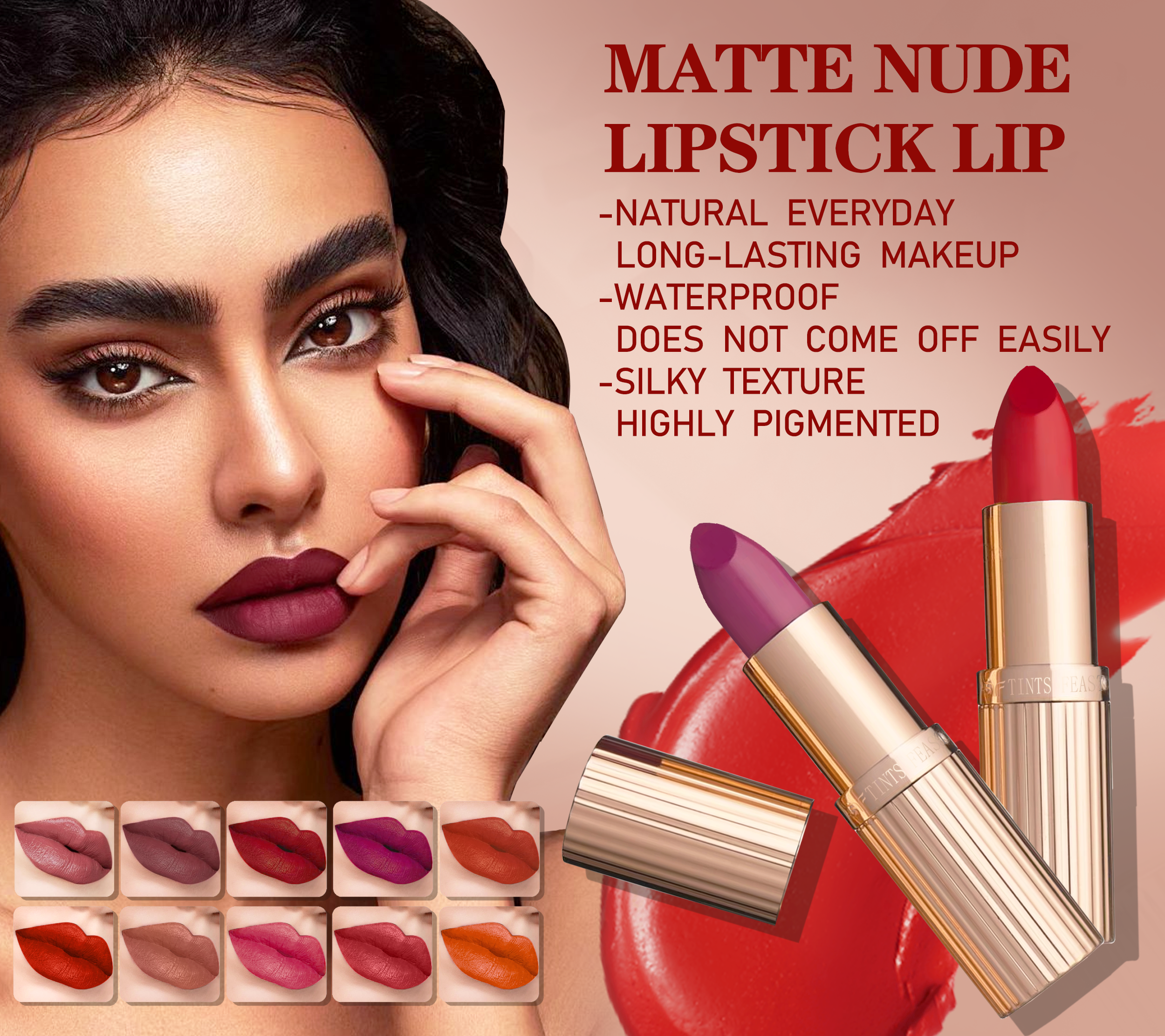
Tints Feast’s waterproof non-transferable Lipstick is positioned around long wear, kiss-proof or transfer-resistant performance, rich matte color, and comfort-supporting ingredients. This type of product can fit brands that want a performance-led message, but the final decision should still come from sample testing.
High-pigment matte with better comfort
Matte Lipstick remains attractive because it often looks polished, modern, and color-rich. Customers like strong payoff, but they usually reject formulas that drag, crack, or settle heavily into lip lines. A high-pigment matte formula should deliver color quickly without making the lips feel coated or stiff.
Sampling should focus on one-swipe payoff, evenness, patchiness, cracking, and how the color looks after talking or drinking. A shade that appears bold in the tube may apply unevenly if the pigment load is not balanced with the base texture. Brands should also test darker shades carefully because deep reds, berries, and browns often reveal unevenness faster than soft nudes.
Tints Feast’s highly pigmented Lipstick is built around lightweight wear, matte texture, moisturizing feel, and strong color payoff. Its positioning shows how a matte formula can aim for both intensity and comfort instead of treating them as separate selling points.
Moisturizing, tint, and balm-like formulas
Not every private label Lipstick line needs to focus on dramatic matte color. Softer formulas can be better for daily makeup, younger users, dry-lip customers, warm-weather markets, or casual beauty brands. A moisturizing formula often supports repeat use because customers can apply it without worrying as much about dryness or precision.
Tint and balm-like products sit between color cosmetics and lip care. They may not deliver the same bold payoff as a matte bullet, but they can feel more approachable for low-maintenance routines. A hybrid lip product can also help a brand speak to customers who want comfort first and color second.
Match Finish and Format to the Customer’s Makeup Habit
Finish choices that change the user experience
Finish changes how customers use the product, not just how it looks in photos. Matte finishes suit bold color, polished makeup, and longer-wear positioning. Soft matte or velvet finishes feel less severe and can work better for daily use because they give a blurred look without the same dry impression.
Creamy or moisturizing finishes are easier for customers who want comfort and smooth glide. Tint or balm finishes support natural makeup routines, while a glossy layer adds shine and dimension. The right finish should match the customer’s habit: a person who reapplies casually during the day needs a different product from someone who wants color to stay fixed for hours.
Finish
Best Customer
Main Benefit
Watch-Out Point
Matte
Bold color users
Strong payoff and polished look
Can feel dry if poorly balanced
Soft matte or velvet
Daily makeup users
Smooth look with easier wear
May need reapplication
Moisturizing or creamy
Comfort-first users
Better glide and softer feel
May transfer more easily
Tint or balm
Low-maintenance users
Natural color and easy use
Lower color intensity
Glossy layer
Shine-focused users
Fuller-looking lips and layering
Can feel sticky if overdone
Bullet Lipstick vs Lip Crayon vs Lipstick Pen
Format affects how customers apply the product. Bullet Lipstick feels classic, recognizable, and giftable, which makes it a natural choice for a hero product. It also gives brands more room for packaging design, shade labels, and premium visual presentation.
Lip Crayon feels more casual and precise. The shape helps users outline and fill the lips with one product, making it useful for customers who do not want to carry both Lipstick and Lip Liner. Lipstick Pen formats can also support quick application, especially for brands that want a portable or easy-to-use product. Tints Feast includes Lipstick Pen alongside classic Lipstick formats, showing that format choice can be part of private label planning rather than an afterthought.
Where Lip Liner and Lipgloss fit in the range
Lip Liner is most useful when the brand sells defined, bold, or deeper lip colors. It can sharpen the lip edge, correct uneven shape, and help keep color from spreading outside the natural lip line. A liner does not need to match every shade exactly; a few well-chosen tones can support many Lipstick colors.
Tints Feast’s Long Lasting Lip Liner is positioned around smooth glide, long wear, soft matte finish, vibrant color, precise application, blending, and feathering prevention. That makes it a good companion category for a Lipstick line built around clean edges and stronger color looks.
Lipgloss should be treated as a separate product decision, not just a shiny version of the same shade. A clear gloss can layer over multiple colors, while nude or shimmer gloss can create a softer look for customers who prefer shine over intensity. When planned carefully, Lipgloss gives the lip range more flexibility without forcing the brand to duplicate every Lipstick shade.
Build a Shade Range That Can Sell Through
Start with fewer shades and clearer logic
A starter shade range should be easy to understand at first glance. Too many colors create more photography, naming, sampling, inventory, and MOQ pressure. A smaller range with clear shade roles can be more commercial than a large collection that feels random.
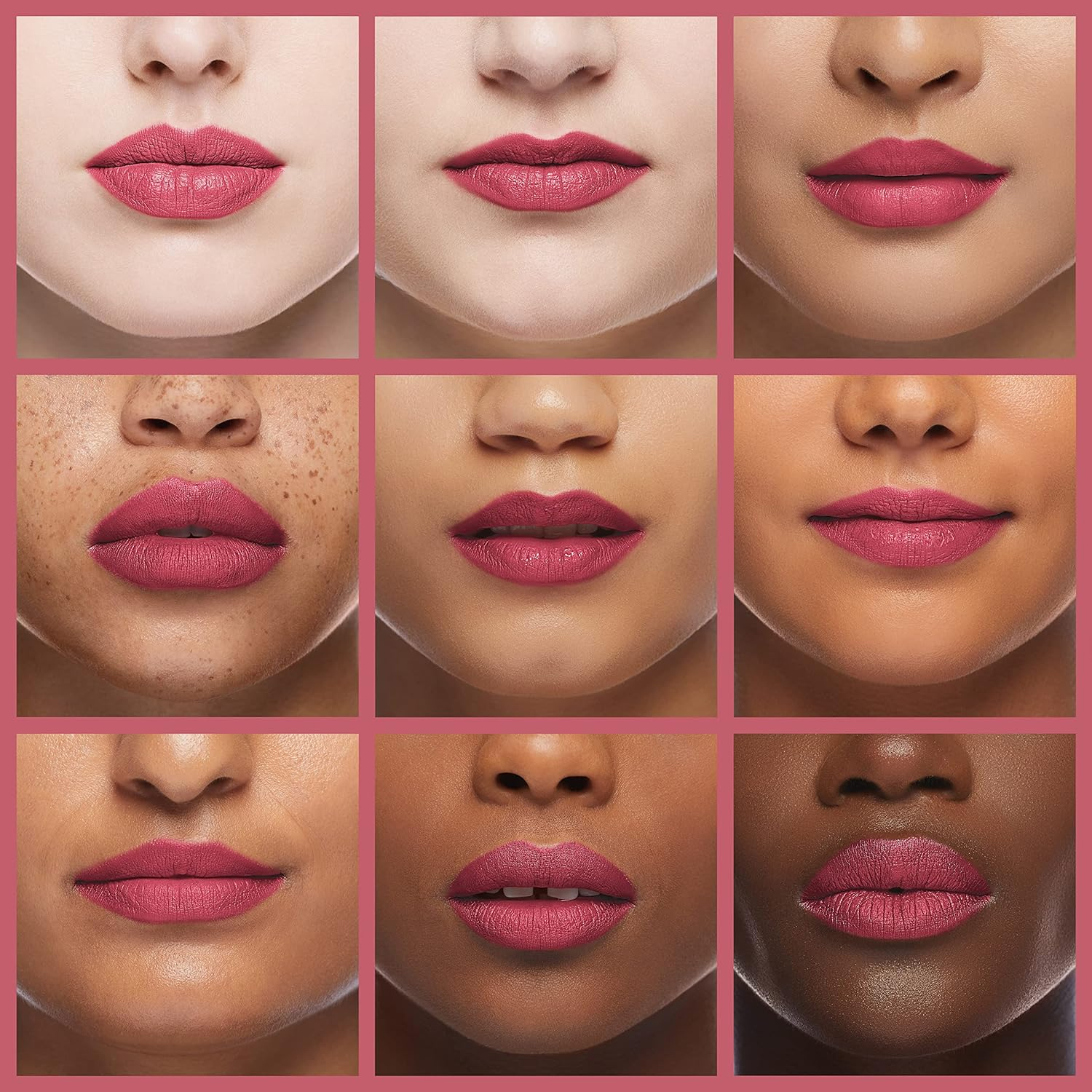
A practical first line might include two everyday nude or neutral shades, one rose or mauve, one warm shade such as terracotta or brick, and one classic red or deeper statement color. This gives the customer options without overwhelming the product page. Each shade should have a reason to exist, whether it supports daily wear, seasonal makeup, bold looks, or deeper skin tones.
Plan Lip Liner and Lipgloss pairings carefully
Pairing strategy matters because supporting lip products can either simplify the buying decision or make it more confusing. Lip Liner shades do not need to match every Lipstick shade one-to-one. A smaller liner system with nude brown, rose brown, warm brown, red, and deep berry can support multiple shades while keeping MOQ under control.
Lipgloss can be planned even more flexibly. One clear gloss, one shimmer gloss, and one nude or rosy tinted gloss may cover enough layering options for a first launch. A brand can then expand once it knows which Lipstick shades sell through fastest.
Lipstick Shade Role
Matching Lip Liner
Optional Lipgloss Layer
Target Customer
Everyday nude
Nude brown
Clear or nude gloss
Daily makeup users
Rose or mauve
Rose brown
Soft pink gloss
Natural makeup buyers
Warm statement
Warm brown
Clear gloss
Trend-driven customers
Red or deep shade
Red or deep berry
Clear gloss
Bold color users
Packaging, MOQ, and Sampling Should Be Planned Together
Packaging should support the formula and price point
Packaging is not only decoration. It affects protection, usability, perceived value, and whether the product feels aligned with the price. A matte bullet Lipstick needs a secure tube, stable bullet fit, clean cap closure, and shade labeling that customers can read easily.
Lip Crayon or Lipstick Pen packaging needs a reliable mechanism, whether twist-up or sharpenable. Lipgloss requires attention to the applicator, wiper control, leakage risk, and how much product comes out in one swipe. Secondary packaging also matters because the box, logo placement, finish, and shade sticker can influence how professional the product feels.
Expensive custom packaging should come after the brand has validated its formula and shade strategy. A beautiful tube cannot fix a poor texture, weak color payoff, or unclear product promise. For many first launches, a well-chosen stock component with clean branding can be more practical than a custom mold.
Confirm MOQ, sample timing, and production lead time early
MOQ affects the entire launch plan. Shade count, formula choice, packaging design, and cash flow all depend on how the manufacturer calculates minimum order quantity. A brand should ask whether MOQ applies per shade, per formula, per component, or per packaging style before finalizing the collection.
One private label Lipstick option from Tints Feast includes 25 colors, ISO/GMPC/FDA certificate information, 3,000 pcs MOQ, 2–4 days sample time, and 25–35 days lead time. MOQ may also vary from 1,000 to 12,000 pieces depending on product design, raw materials, and packaging requirements.
Use samples before approving bulk production
Samples reduce risk before bulk production begins. A brand should check formula feel, shade accuracy, cap fit, bullet stability, fragrance, packaging print, label placement, and the way the final product looks in hand. The goal is to catch problems while they are still small enough to correct.
A practical OEM/ODM process usually connects sample testing, color selection, packaging choice, design submission, production, and delivery. This sequence keeps product approval, design approval, and production approval aligned. It also helps prevent common launch problems, such as approving a formula before confirming packaging fit or choosing shades before checking final color payoff.
Before placing a bulk order, use a simple approval checklist:
●Formula feel and finish match the product promise.
●Shade range has been tested on the target customer group.
●Lip Liner, Lip Crayon, or Lipgloss additions support the main range.
●Packaging sample has been checked for closure, mechanism, leakage risk, and printing quality.
●MOQ, lead time, payment terms, freight, artwork deadline, and final sample approval are confirmed.
●Ingredient list, batch code plan, certification details, and market-specific labeling needs have been reviewed.
Conclusion
A successful private label Lipstick line depends on clear decisions, not simply more shades or premium-looking packaging. Formula, finish, color planning, Lip Liner pairings, Lip Crayon formats, and Lipgloss options should all support how customers actually use lip products. When these choices are planned together, brands can reduce sampling waste, control inventory risk, and create a range that feels easier to buy.
Guangzhou Vast Cosmetic Co.,Ltd. can support this process with private label lip product options that help brands turn formula ideas, shade concepts, and packaging needs into a more practical launch plan.
FAQ
Q: What should brands decide before choosing a private label Lipstick formula?
A: Start with the product promise: long-wear, moisturizing, matte, tint-like, or high-pigment color. This decision shapes formula testing, shade planning, packaging, and MOQ discussions.
Q: How many Lipstick shades should a new brand launch first?
A: A focused starter range usually works better than too many shades. Begin with everyday neutrals, one soft color, one warm shade, and one statement red or deep tone.
Q: Do Lip Liner shades need to match every Lipstick shade?
A: Not always. A few versatile Lip Liner shades, such as nude brown, rose brown, red, and berry, can support multiple Lipstick colors and reduce inventory pressure.
Q: What is the difference between Lipstick and Lip Crayon?
A: Lipstick usually feels more classic and polished, while Lip Crayon offers easier control, portability, and more precise application for quick or beginner-friendly lip looks.
Q: When should a brand add Lipgloss to a private label lip line?
A: Add Lipgloss when shine, layering, or a softer entry product improves the customer routine. Clear or nude gloss can support several Lipstick shades without duplicating colors.
Q: Why is sampling important before bulk Lipstick production?
A: Sampling helps check texture, shade accuracy, wear, packaging fit, scent, and finish before committing to MOQ, reducing the risk of costly production mistakes.
Guangzhou Vast Cosmetic Co.,Ltd. was established in 2018, a high-tech enterprise focusing on customizing make-up for customers, integrating scientific research, production, sales and service.