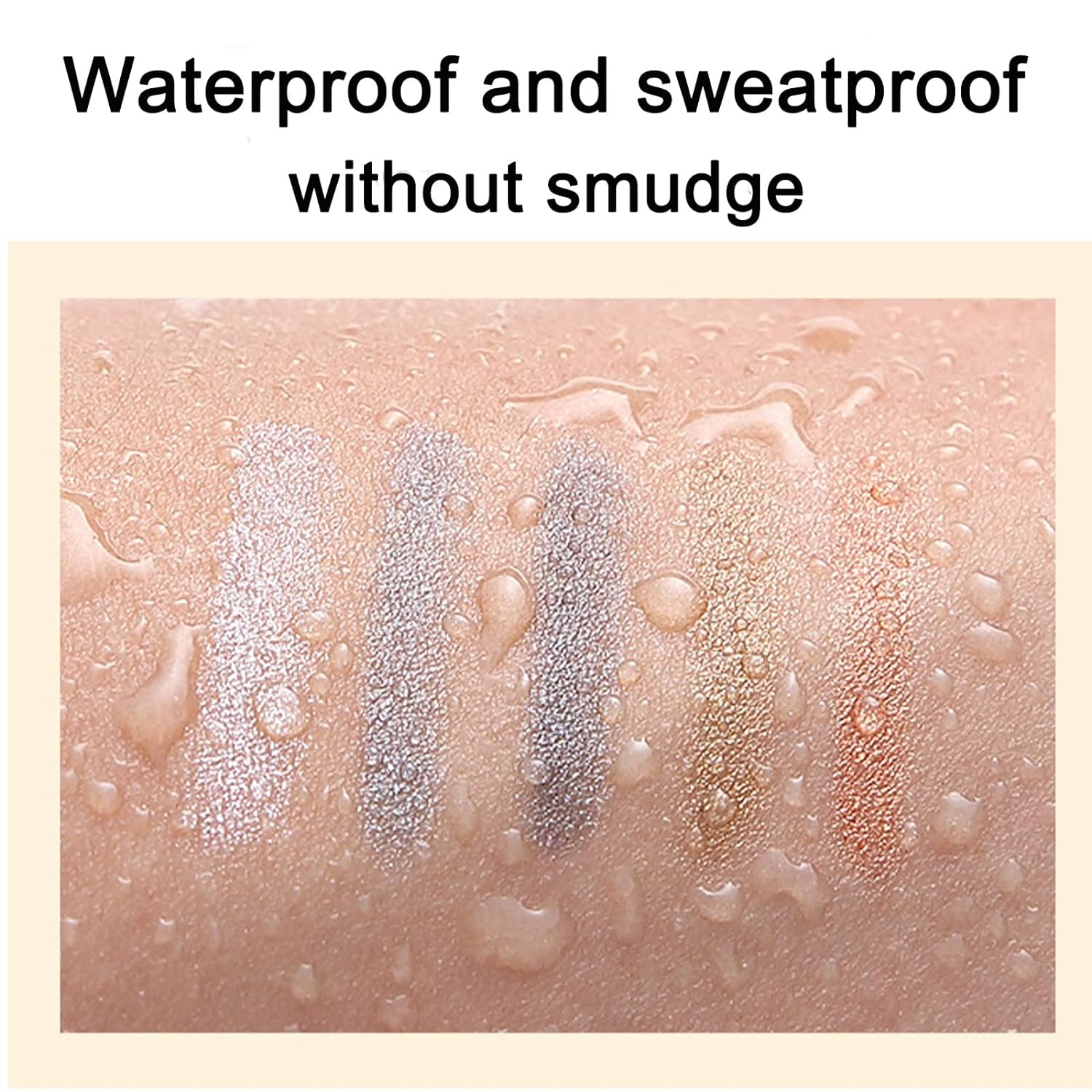
Waterproof eyeshadow does not have one universal wear time. A formula may look fresh for most of a workday on one person and show creasing earlier on another because eyelid oil, humidity, application amount, eye shape, and activity all matter. Instead of treating an hours claim as a guarantee, use it as a starting point and evaluate the product under realistic conditions. Waterproof performance is most meaningful when it helps color remain even through the parts of the day that normally cause fading, smudging, or transfer.
Key Takeaways
Waterproof eyeshadow is designed for extended wear, but the exact duration varies by formula and wearer.
A product’s label claim should be read alongside its recommended application and removal method.
Oil, humidity, touching the eyes, and thick layers can shorten apparent wear time.
A controlled primer layer and thin, set layers often improve eyeshadow longevity.
Test wear on an ordinary day before depending on a formula for an important event.
Why no single number tells the whole story
Eyeshadow longevity is not measured in a vacuum. A person with balanced lids in a cool, dry office may find that a long-wear look changes very little by evening. A person with oily lids who walks outdoors in humid weather may see color gather or transfer much sooner. Neither experience makes the product description inherently wrong; the conditions are different.
The same formula may also behave differently depending on format. A powder waterproof eyeshadow may stay even when pressed over primer. A stick can create a durable base but may crease if applied in a thick stroke. A liquid can look smooth and high-impact, yet it needs sufficient dry-down time before the lid folds. Wear time is therefore a result of product plus process.
For a useful assessment, ask: does the color remain visible? Does the crease stay reasonably smooth? Has shimmer migrated? Is the outer corner still defined? Does the product remain comfortable? These visual and comfort checks matter more than comparing every routine to a fixed number of hours.
What affects waterproof eyeshadow wear time
Eyelid oil and skin preparation
Oil is one of the largest variables. It can loosen pigment, make a cream layer slide, and push product into the crease. Start on clean, dry lids. If needed, use a small amount of eye primer and let it set. Thick moisturizers or concealer layers may create the opposite result by making the base too slippery.
Humidity, sweat, and environmental change
Waterproof eyeshadow is most valuable when moisture exposure rises. Humid weather, outdoor activity, commute heat, and temperature changes can all challenge a normal shadow. Tints Feast’s guide towaterproof eyeshadow in hot and humid conditionsshows why resistance and dry-down behavior are central to a long-wear claim.
Formula format and finish
Matte and satin shades often provide a more controlled everyday finish. Reflective shades can look beautiful, but heavy glitter may make any movement more visible. A cream-to-powder or stick base may work well when applied thinly. Powder can reinforce a base or create a complete look on its own. Select the format for the user’s application preference as well as the environment.
How much is applied
Excess product does not create proportionally more longevity. It can create a layer thick enough to move, crack, or collect in a fold. Begin with a small amount, blend it, allow it to set, and build only where coverage or intensity is genuinely missing.
Touching, rubbing, and eye shape
Rubbing the eyes can disrupt even a strong waterproof formula. Hooded lids may create natural contact between the mobile lid and skin above the crease, which can lead to transfer. Change placement rather than adding more product: keep dense color slightly lower on the lid and blend the transition where it remains visible with the eye open.
How to test real-world eyeshadow longevity
Checkpoint
What to inspect
What the result tells you
After application
Smoothness, even color, comfortable feel
Whether the base was applied too thickly
After two hours
First crease line, outer-corner transfer
Whether the formula and primer are compatible
Midday
Fading, patchiness, shimmer migration
Whether oil or humidity is affecting the look
End of day
Overall color, comfort, removal effort
Whether the formula fits the routine
Run the test on a normal day first. Do not change four variables at once. If color fades, try a thin primer or a pressed powder layer. If the crease gathers, use less primer or cream product. If transfer appears above the crease, give the formula more time to set and change placement. A structured test leads to a useful adjustment rather than a cycle of buying random products.
Extending wear without making the lid heavy
Apply a small primer layer only where needed. Press the main shade onto the lid instead of sweeping it everywhere. Blend the edge with a clean brush. If using a waterproof stick, make short strokes and blend before the formula sets. If you want extra depth, let the first layer settle before pressing compatible powder on top.
Tints Feast’s waterproof eyeshadow stick can be used as a fast, targeted base, while a palette gives options for setting and shaping color. Thesmudge-proof eyeshadow articleis also relevant to a practical point: product chemistry supports wear, but application controls whether that support is used well.
For a long event, keep the eye look architecturally simple. Use one stable lid shade, one transition shade, and one small reflective accent. This produces enough dimension for photographs without placing many dense layers where the eyelid moves most. Bring a small clean brush for a modest touch-up instead of carrying product to repeatedly reapply.
Evaluating product claims responsibly
Wear claims should reflect controlled testing conditions, but no claim can reproduce every user’s climate, lid type, and routine. A reliable product description can explain the intended performance benefit—resistance to water, sweat, humidity, or transfer—without implying that the eye look will remain unchanged under every condition.
For private-label product development, this means defining the customer’s most likely scenario. Is the formula meant for a humid-market commute, a quick daily stick, a professional event, or a travel palette? Tints Feast can help frame those use cases across the eyeshadow product categoryso the product format, shade selection, and on-page instructions make sense together.
Removal affects the next wear, too
A waterproof formula should be removed thoroughly every night. Use an appropriate eye makeup remover, hold it against the closed lid for a few seconds, then wipe gently. Harsh scrubbing can cause irritation and may leave the lid uncomfortable the next day. A clean, calm eye area gives the next application a better surface, so removal is part of the long-wear routine rather than an afterthought.
Conclusion
Waterproof eyeshadow usually lasts longer than a standard formula under moisture, sweat, and humidity, but its true wear time depends on the person and the routine. Use a realistic test day to evaluate smoothness, transfer, color, and comfort. Then adjust one factor at a time: lid preparation, primer amount, product format, layer thickness, or placement. That approach produces a more dependable result than relying on an hours claim alone.
FAQs
How long should waterproof eyeshadow stay on?
It should remain presentable through the intended activity, but the exact length varies with the formula, eyelid oil, weather, and application. Test it in your own routine.
Does waterproof eyeshadow last longer than regular powder eyeshadow?
It often performs better against water and humidity. A well-applied regular long-wear powder can still last very well in low-moisture conditions.
Why does my waterproof eyeshadow fade by afternoon?
Oil, a slippery skincare base, thin pigment application, humidity, or rubbing the eyes can contribute. Identify which change occurs first before changing the whole routine.
Can I make waterproof eyeshadow last longer with primer?
Yes, a light primer layer can help. Too much primer can crease, so keep the layer thin.
Does shimmer last as long as matte waterproof eyeshadow?
It can, but heavy glitter or reflective particles may show migration more clearly. Use shimmer selectively over a stable base.
Should I touch up waterproof eyeshadow during the day?
Minor smoothing with a clean fingertip or brush is fine. Avoid repeatedly adding thick layers, which can make the crease more noticeable.
Guangzhou Vast Cosmetic Co.,Ltd. was established in 2018, a high-tech enterprise focusing on customizing make-up for customers, integrating scientific research, production, sales and service.