Starting a private label makeup brand usually feels simple until the first real decisions appear: which product should lead, how many shades are realistic, what claims are safe, and whether the manufacturer can keep quality consistent after sampling. A focused launch matters more than a crowded catalog. For beginners, categories like Foundation, Primer, Concealer, Lipstick, Lipgloss, Eyeshadow, and Blush should not be chosen just because they are popular; they should work together as a clear routine, match a specific customer, and leave room to test demand before scaling.
Choose a Brand Direction Before Picking Products
The first useful question is not “Which makeup products should I sell?” It is “Who will understand this brand quickly enough to buy from it?” A private label makeup brand needs a specific customer before it needs a large product catalog. That customer might be an everyday beginner who wants simple base products, a skin-first buyer who cares about comfortable coverage, a bold color lover looking for expressive shades, or a mature skin customer who values smooth texture and easy blending.
That audience will influence almost every product choice. A beginner-friendly brand may need clear shade descriptions, forgiving textures, and simple packaging. A skin-first line may focus on Foundation, Primer, and Concealer with lightweight feel, buildable coverage, and a natural finish. A color-led brand may place more weight on Lipstick, Eyeshadow, Lipgloss, and Blush, where payoff, shade story, and visual content matter more than a complicated complexion system.
A narrow direction also protects the budget. Without it, founders often order too many formulas, too many shades, and too many packaging styles before they know what customers actually want. Starting with one customer group makes the product brief clearer and gives the manufacturer fewer vague ideas to interpret.
Build a Lean First Line That Customers Can Understand
A new makeup brand does not need to launch with every category at once. One hero product gives the brand a clearer story, simplifies photography, reduces sample costs, and makes customer feedback easier to read. When a founder starts with a focused product, the product page, social content, shade education, and reorder planning all become more manageable.
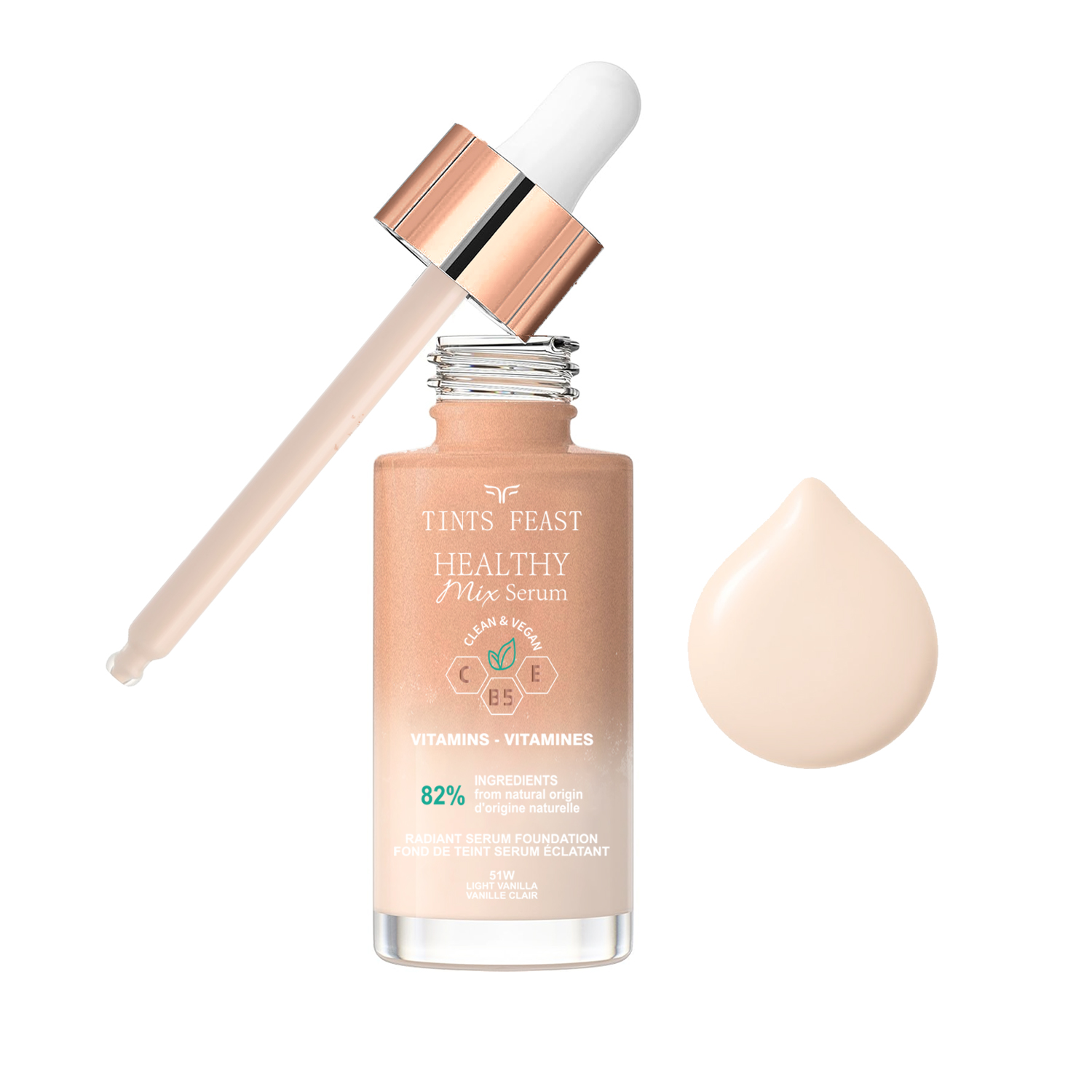
For a face-focused brand, Foundation can be a strong hero product because it naturally carries many buying questions. Customers want to know the shade range, undertone logic, finish, coverage level, skin feel, wear time, and how it behaves with Primer or Concealer. A foundation-led brand can then build a practical routine around base makeup rather than adding unrelated color products too soon.
TintsFeast’s Easy Blur Natural Airbrush Foundation works as one possible complexion direction because the product name itself suggests a blurred, smooth-skin finish. The goal is not to copy a product description, but to understand how a hero product can communicate a clear use case. A founder planning a similar base-makeup direction would need to test whether the finish, coverage, shade range, and packaging all support the same promise.
Find a Manufacturer That Fits Your Real Launch Stage
Ask about MOQ, samples, and customization first
A manufacturer may look impressive, but the real question is whether their process fits the brand’s current stage. New founders should ask about MOQ by formula, shade, and packaging type before discussing a large product vision. A low MOQ for one Lipgloss shade may not mean the same terms apply to Foundation, Eyeshadow palettes, or custom packaging.
Samples are equally important. A good sample process should clarify cost, timeline, revision limits, courier fees, and what happens if the first version does not match the brief. The founder should test texture, scent, color, application, dry-down, transfer, wear, and packaging feel before approving bulk production. A product that looks good in a catalog still has to work on real skin, in real lighting, and under normal customer use.
Customization should be discussed in practical terms. Can the manufacturer adjust coverage, finish, shade, undertone, viscosity, fragrance, shimmer level, or packaging components? Can a Foundation formula be developed in different shades without losing consistency? Can a Lipstick or Eyeshadow shade be matched closely enough for future reorders?
Complexion products deserve extra attention because they involve shade logic and skin-performance expectations. A Foundation line may need undertone planning, coverage testing, oxidation checks, and compatibility with Primer or Concealer. Simpler color products can still be technical, but foundation usually exposes weak product planning faster than a single Lipgloss shade.
Check quality and production support before branding
Branding should not move faster than formula reliability. A beautiful logo cannot fix a product that separates, leaks, oxidizes, cracks, smells unstable, or changes texture during storage. Before spending heavily on visual identity, founders should confirm whether the manufacturer has quality systems and documentation that support consistent production.
Key checks include GMP or ISO 22716-related systems, stability testing, batch consistency, packaging compatibility, COA availability, clear production lead times, and a defined communication process. For private label foundation development, useful manufacturer-readiness checkpoints include ISO 22716 and GMP-certified manufacturing, standard lead times, R&D development cycles, minimum order details, sample development timelines, and private label/OEM services.
Production support also includes how the supplier handles problems. If a shade changes between batches, who investigates the cause? If a pump leaks during testing, will the supplier recommend a different component? If a batch fails a quality check, what documentation and corrective options are available?
These questions may feel less exciting than packaging and shade names, but they protect the launch. A private label makeup brand is built on repeatable product quality. Customers may forgive a young brand for having a small range, but they are much less forgiving when the product experience is inconsistent.
Plan Packaging, Claims, and Compliance Before Bulk Production
Match packaging to formula and usage
Packaging should be treated as part of product performance, not only as decoration. The wrong component can make a good formula harder to use, harder to ship, or harder to keep stable. A founder should consider how the customer will hold, open, apply, store, and travel with the product before approving the final component.
Foundation packaging depends on texture and positioning. A pump bottle can support a liquid base with a more polished feel, while a tube may suit a flexible everyday formula. A stick, cushion, or compact changes the product story entirely because the application method becomes part of the selling point. Primer and Concealer also need packaging that controls dosage, prevents mess, and supports hygienic use.
Lipgloss requires attention to wand shape, stopper fit, leakage control, and compatibility between the formula and tube. Lipstick needs bullet stability, cap fit, heat resistance, and reliable color consistency. Eyeshadow and Blush depend on pan size, pressing quality, fallout control, mirror or brush decisions, and outer carton protection during shipping.
Custom packaging should wait until samples are approved. If the formula changes, the filling method, viscosity, usage instructions, or label space may also change. Approving packaging too early can create avoidable delays and unnecessary cost.
Keep product claims safe and believable
Early brands often overuse claims because they want the product to sound stronger. That approach can backfire if the claim is difficult to prove or starts sounding medical. Cosmetic claims should stay close to appearance, feel, application, and wear.
A Foundation may “help create smoother-looking skin,” “give buildable coverage,” or “leave a soft-focus finish.” A Lipgloss may “enhance shine,” “add comfortable color,” or “create a fuller-looking lip effect” without claiming to change lip structure. Eyeshadow, Blush, and Lipstick can focus on blendability, payoff, dimension, or long-wear color, as long as the final wording matches the actual product.
Medical-style language should be avoided unless the product is legally positioned and tested for that route. Claims such as treating acne, curing sensitivity, healing damaged skin, or changing skin structure can create regulatory risk. The safer path is to write claims that customers understand and that the brand can support with product performance, testing, or documentation.
Build a simple compliance checklist
Use a simple pre-production checklist before approving a bulk order:
●Formula approved through real-use sample testing.
●Packaging tested for filling, leakage, transport, and compatibility.
●Label reviewed for required information and claim wording.
●Batch documentation, COA, or testing records confirmed.
●Launch market requirements checked before product listing or sale.
●Reorder plan discussed with the manufacturer before inventory runs low.
This checklist is not glamorous, but it keeps the launch grounded. A clear compliance routine also makes the brand more credible when approaching retailers, creators, or distributors later.
Launch Small, Read the Feedback, Then Expand
Use a soft launch to test demand
A soft launch gives a new brand room to learn before making expensive decisions. Instead of ordering a large inventory across many shades and categories, the founder can release a controlled first line and watch how customers respond. This approach reduces risk while still creating real sales data.
The product page should do more than display attractive packaging. Shade, finish, coverage, texture, use case, and application method need to be explained clearly. For Foundation and Concealer, swatches and undertone notes are essential. For Blush, Lipstick, Lipgloss, and Eyeshadow, color payoff and real-skin visuals help customers understand what they are buying.
Short videos can show texture in a way static photos cannot. A Primer can be shown before Foundation, a Lipgloss can be shown in natural light, and an Eyeshadow can be applied with a brush and fingertip to demonstrate payoff. Sample feedback forms, email waitlists, and pre-order campaigns can also reveal which products create the most interest before the brand commits to bigger production.
Marketing should stay close to product education at this stage. Broad storytelling has value, but early buyers need reasons to trust the formula, shade, finish, and routine. A small brand can win attention by being clear, useful, and honest.
Decide the next product from real data
Expansion should come from evidence, not excitement. Useful signals include best-selling shades, customer questions, repeat purchase interest, return reasons, texture complaints, packaging issues, and social content performance. Each signal points to a different next move.
If Foundation performs well but customers ask for more undertones, shade expansion may be more valuable than launching a new category. If Lipgloss gains traction, Lipstick or lip sets may be the natural next step. If Blush or Eyeshadow content gets strong engagement, seasonal color extensions can be tested in small runs before becoming permanent.
A post-launch decision checklist keeps growth disciplined:
●Reorder the same product if demand is steady.
●Adjust formula, shade, or packaging if feedback repeats.
●Expand shades only when the existing range proves demand.
●Add a related category when it strengthens the same routine.
●Pause weak products instead of forcing paid promotion to carry them.
The strongest private label makeup brands do not expand randomly. They use the first launch to understand what customers value, then build the next product around that proof.
Conclusion
Starting a private label makeup brand from scratch becomes more manageable when each decision supports a clear customer, a focused product line, and a realistic launch plan. Instead of rushing into every category, founders can begin with a connected routine—such as Foundation with Primer and Concealer, Blush with Lipgloss, or Eyeshadow with Lipstick—and refine the range through samples, testing, and early feedback.
Guangzhou Vast Cosmetic Co.,Ltd. supports this process with makeup customization, private label production, packaging options, and category coverage that helps brands move from product idea to market-ready collection with fewer unnecessary steps.
FAQ
Q: How much does it cost to start a private label makeup brand?
A: Costs vary by product type, MOQ, packaging, testing, and branding needs. A lean launch usually starts with fewer SKUs, samples, and basic packaging before scaling inventory.
Q: What products should I launch first for a makeup brand?
A: Start with products that form a clear routine. Foundation with Primer and Concealer, Blush with Lipgloss, or Eyeshadow with Lipstick can be easier to explain and market.
Q: Do I need custom formulas to start a private label makeup line?
A: Not always. Many founders begin with existing private label formulas, then customize shade, finish, texture, packaging, or claims after testing demand and customer feedback.
Q: How do I choose the right private label makeup manufacturer?
A: Check MOQ, sample process, customization options, lead times, testing support, batch consistency, packaging compatibility, and whether the manufacturer can scale with future orders.
Q: What legal or compliance details should I prepare before launch?
A: Prepare ingredient lists, product identity, net content, company details, batch codes, warnings, and safe cosmetic claims. Requirements vary by market, so review regulations before selling.
Q: How can a new makeup brand reduce launch risk?
A: Launch with a focused product line, test samples carefully, collect early feedback, monitor shade demand and complaints, then expand only when real customer data supports it.
Guangzhou Vast Cosmetic Co.,Ltd. was established in 2018, a high-tech enterprise focusing on customizing make-up for customers, integrating scientific research, production, sales and service.